
News and Events | Central League Winners Medal
Heritage Trust acquire early Dunfermline Athletic memorabilia
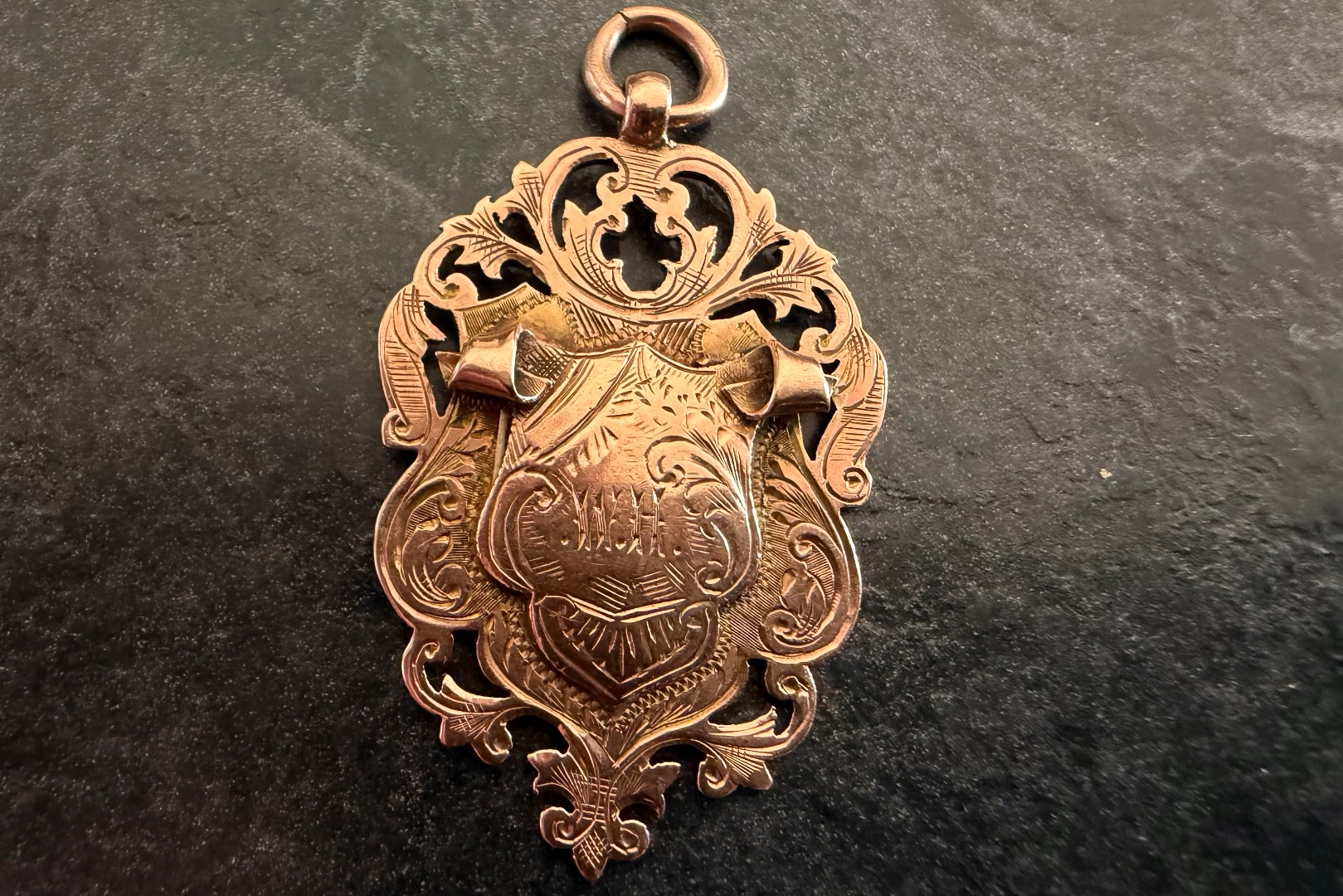
Willie Hamilton`s 1910/11 Central League winners medal was acquired by Dunfermline Athletic Heritage Trust from Paul Hamilton, who is based in Kent and is the grandson of Willie Hamilton. The medal was left to him by his father, also named Willie Hamilton, who in fact played briefly for Dunfermline during the war as well as making guest appearances for Arsenal during the war.
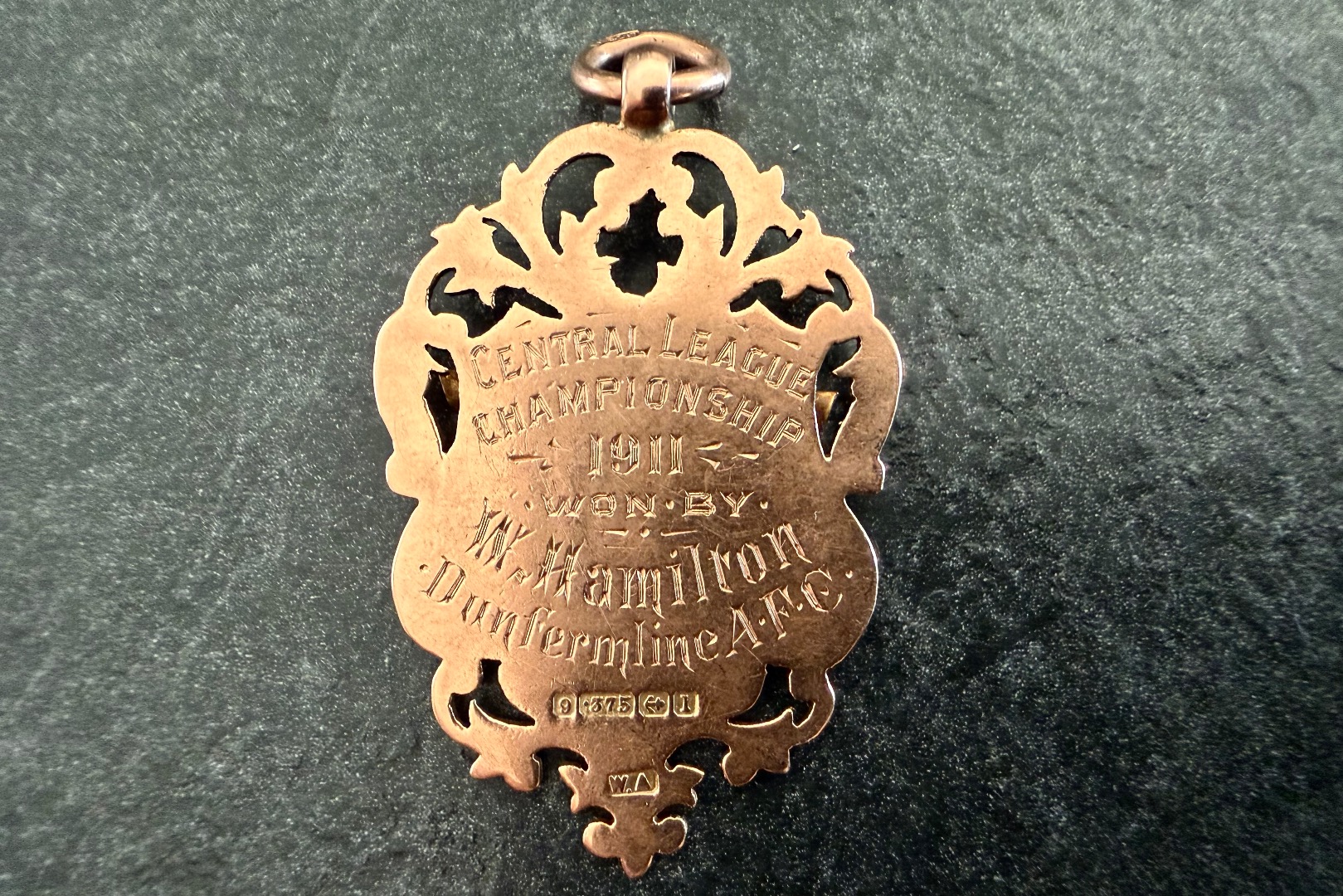
The Central League was reformed for the fourth time in 1909, principally from clubs in central Scotland who had resigned from the Northern League at the end of the previous season. Their reasoning had been that they didn`t want to have such long distances to travel, and this proved to be wise with more localised football providing more interest and bigger crowds. Indeed, in the immediate post-First World War period when the Scottish League refused to restart the Second Division, the Central League enjoyed huge success because they could sign prominent Scottish, and English, League players as the clubs were not members of the Inter-League Board and therefore did not have to pay transfer fees. Dunfermline recruited the great Andy Wilson among others.
Season 1910/11 was possibly Dunfermline Athletic`s most successful season in the club`s history up to that point - the club established a new record crowd at East End Park, the team went the entire season including friendlies unbeaten at home and then went on to win both the Fife Cup and the Central League championship. Although the club declined to apply for Scottish League membership that year, it undoubtedly was the catalyst for the successful application at the end of the next season which saw Dunfermline Athletic join the Scottish League for the first time in 1912.
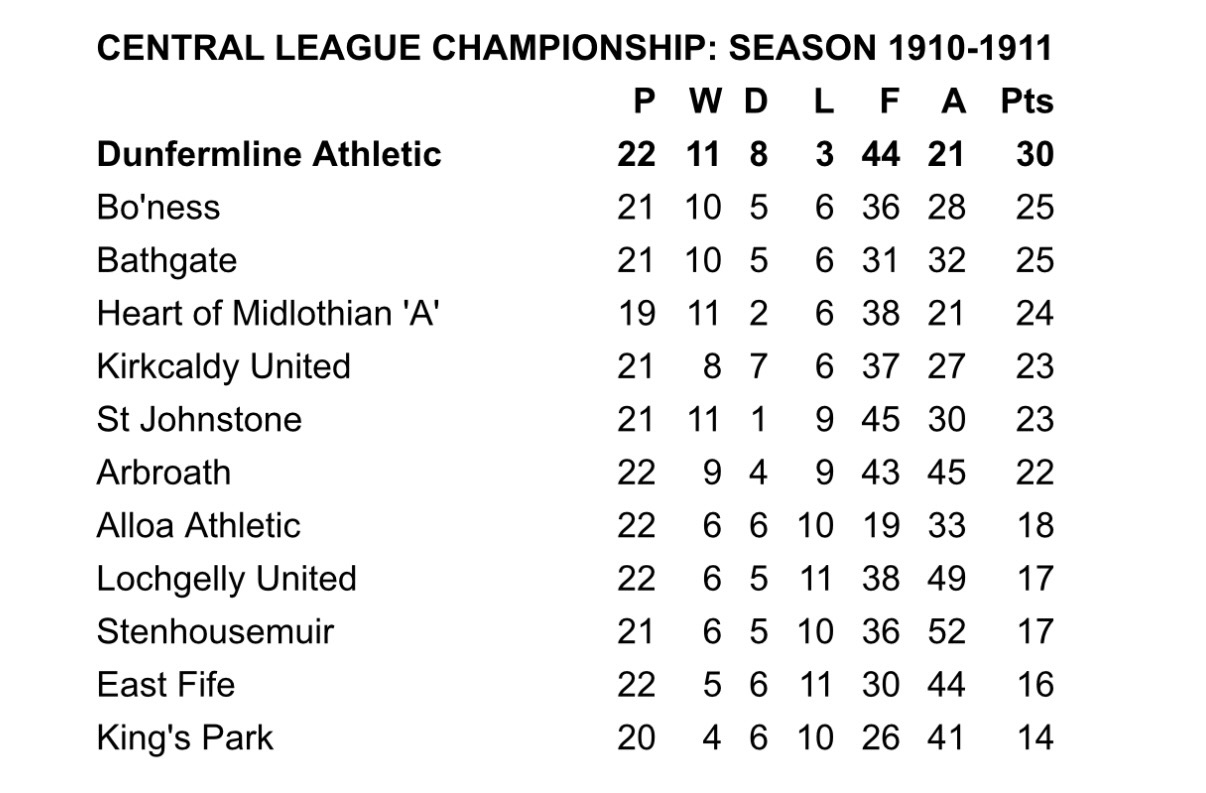
One of the main reasons for Dunfermline Athletic`s success in 1910/11 was the recipient of this medal, Willie Hamilton. Born in Leven on 9 October 1889, Dunfermline signed Willie from Cowdenbeath Vulcan Rovers for the start of their campaign in the new Central League in 1909. The club clearly wanted to boost their chances in the new league so also changed their shirts, wearing black and white stripes for the first time.
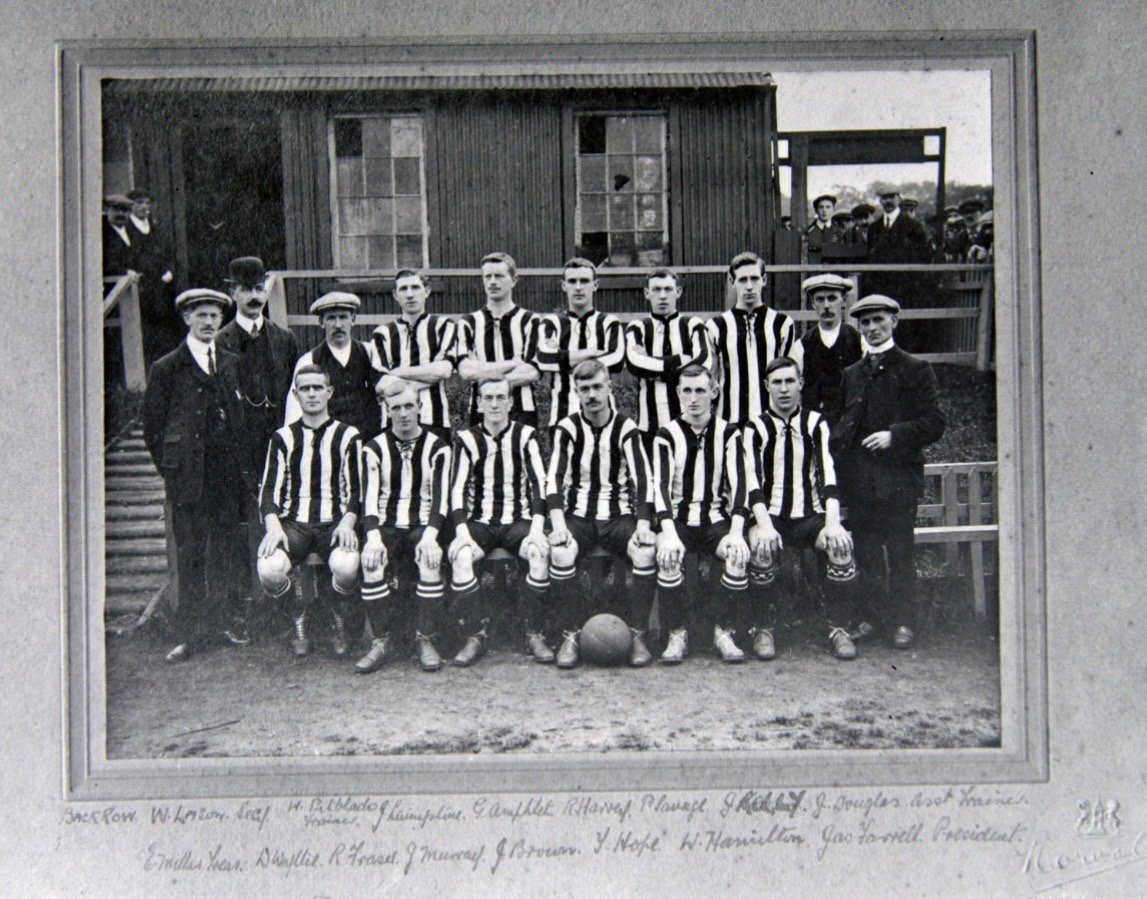
Dunfermline Athletic, season 1909-1910. Willie Hamilton is seated bottom row, furthest right
Dunfermline was a respectable third in that first season, but went on to conquer all in 1910/11, with Athletic`s left half Willie Hamilton catching the eye of bigger clubs. Hamilton left Dunfermline for Partick Thistle at the end of the season in May 1911 and spent the next ten years in a successful Jags team chalking up more than 300 appearances, including reaching five Cup finals. Such was his contribution that Thistle arranged a benefit match for him against Newcastle United on 13 April 1920.
It all ended tragically though because he should have played for Partick in the 1921 Scottish Cup Final against Rangers (which Partick won) but he fell ill just before the game. It transpired than he had tuberculosis and died just four months later on 14 August 1921 at the age of 31. As it happened, it was the opening day of the football season and 16,000 flocked to Firhill where flags were flown at half-mast. Despite playing in Glasgow for ten years, Willie had continued to live in Dunfermline and was buried in Dunfermline Cemetery adjacent to East End Park with both Partick Thistle and Dunfermline Athletic laying wreaths.
Our thanks to The Thistle Archive for assistance with this article.
Duncan Simpson
Dunfermline Athletic Club Historian
Related Stories
- The Cottage Hospital Challenge Cup
- Dunfermlines first Scottish League title
- Loftus Cup medal comes home
- Donate to Heritage Trust
views: 14